Ecole Fleurimage, Versoix
Extension of Montfleury School, Versoix
Architectural competition — Geneva, Switzerland
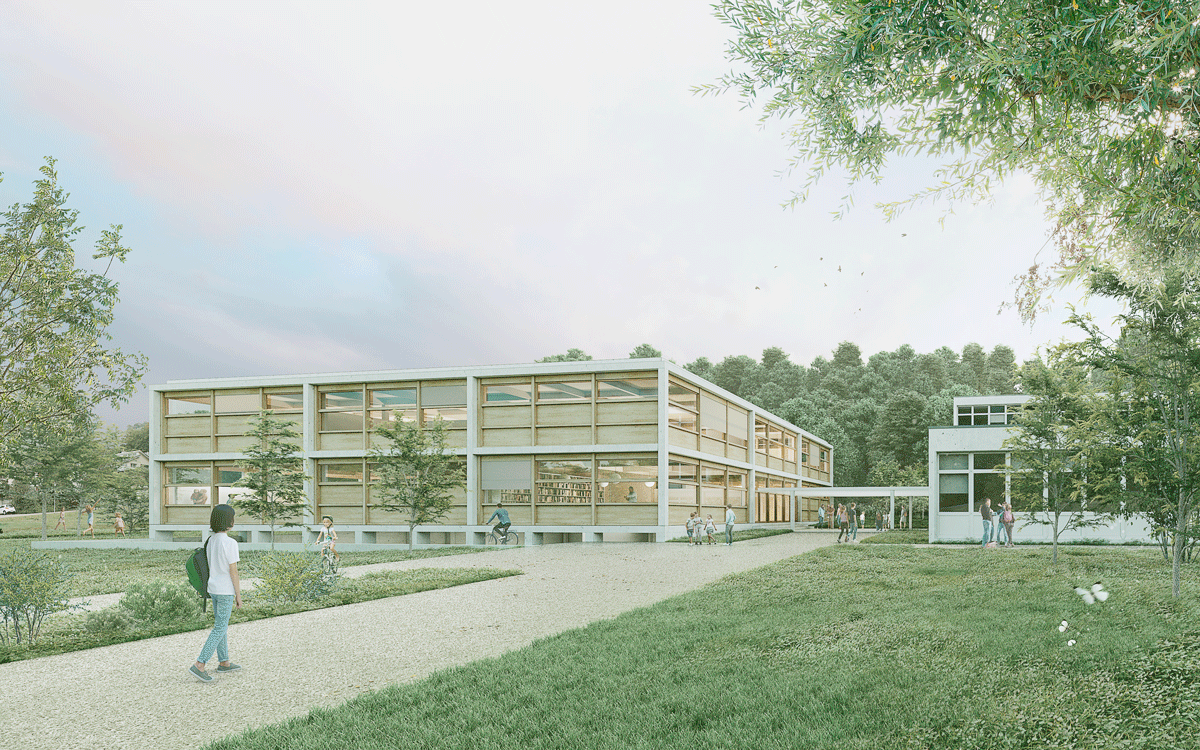
This project was developed as part of the competition for the extension of Montfleury School in Versoix. Located on a complex site shaped by significant level differences, protected trees and strict urban constraints, the proposal introduces a compact, flexible and sustainable building designed to evolve over time.
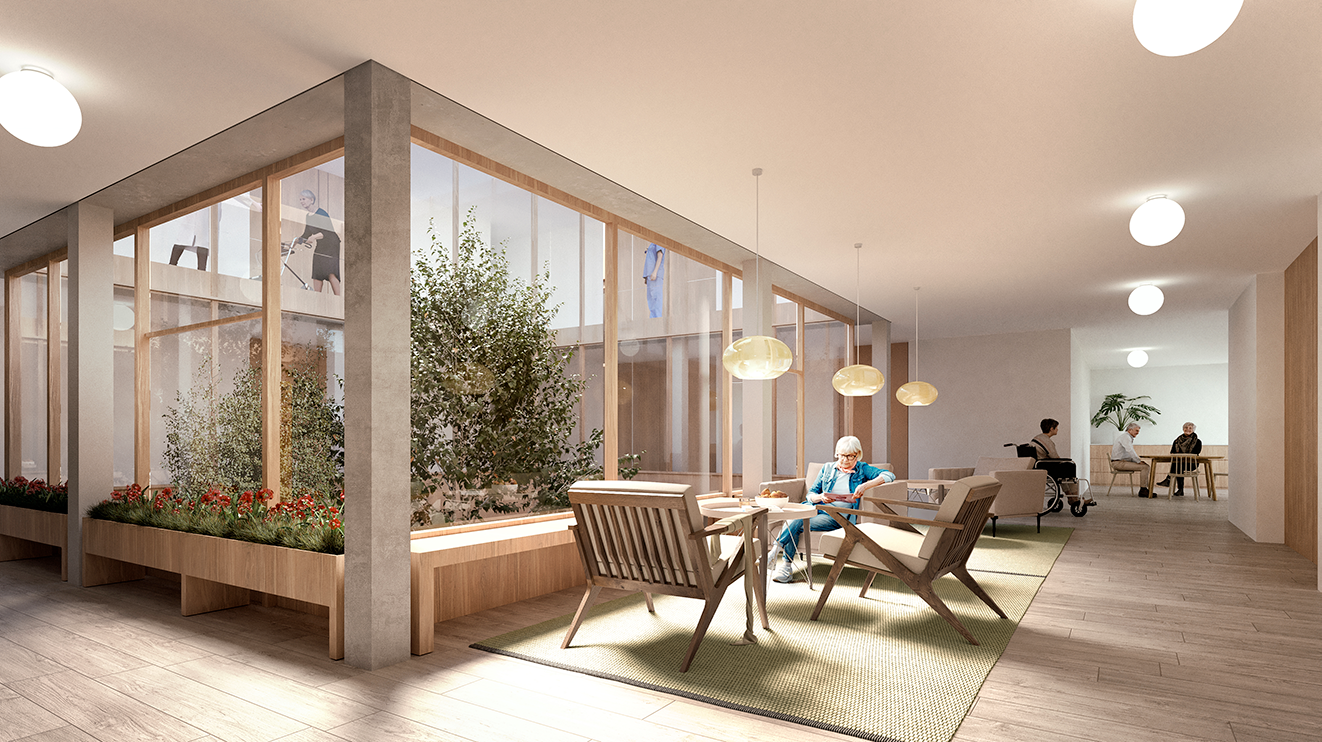
The building was initially conceived to accommodate new school facilities before being transformed into a daycare center in a later phase. This long-term adaptability became a central element of the project, influencing both the spatial organization and the construction strategy. The design is based on a modular system that allows future transformations with minimal intervention.
The project integrates naturally into the existing topography through a partially embedded volume connecting two entrance levels between Chemin de Montfleury and Chemin de Versoix-la-Ville. This configuration creates protected outdoor areas and landscaped spaces carefully organized according to age groups and educational activities.
Classrooms are oriented towards the south-east to maximize natural daylight, while playgrounds and covered outdoor spaces create a calm, safe and child-friendly environment. Particular attention was given to the quality of the outdoor spaces, conceived as a direct extension of the learning environment.
The structural concept combines timber and concrete in order to balance durability, technical performance and reduced environmental impact. The main structure uses low-carbon clinker-free Hoffmann concrete, while timber is used for the façades, secondary elements and integrated furniture. Interior partitions made from raw earth blocks also contribute to the natural regulation of indoor comfort.
The energy concept is based on a water-to-water geothermal system connected to the Montfleury groundwater table, combined with geocooling for summer comfort. Photovoltaic panels and a double-flow ventilation system complete the environmental strategy, developed according to Swiss THPE 2000W standards.
Through a rational, adaptable and context-sensitive architecture, the project aims to create a durable and welcoming learning environment capable of evolving with future needs.