Rénovation maison, Madrid
We carried out the preliminary studies prior to the purchase of the house, allowing the clients to fully understand the property’s potential and support their decision-making process. We then developed the architectural concept design.
Our scope did not include materiality studies, which were handled by the construction company. Interior design and decoration choices were defined directly by the clients.
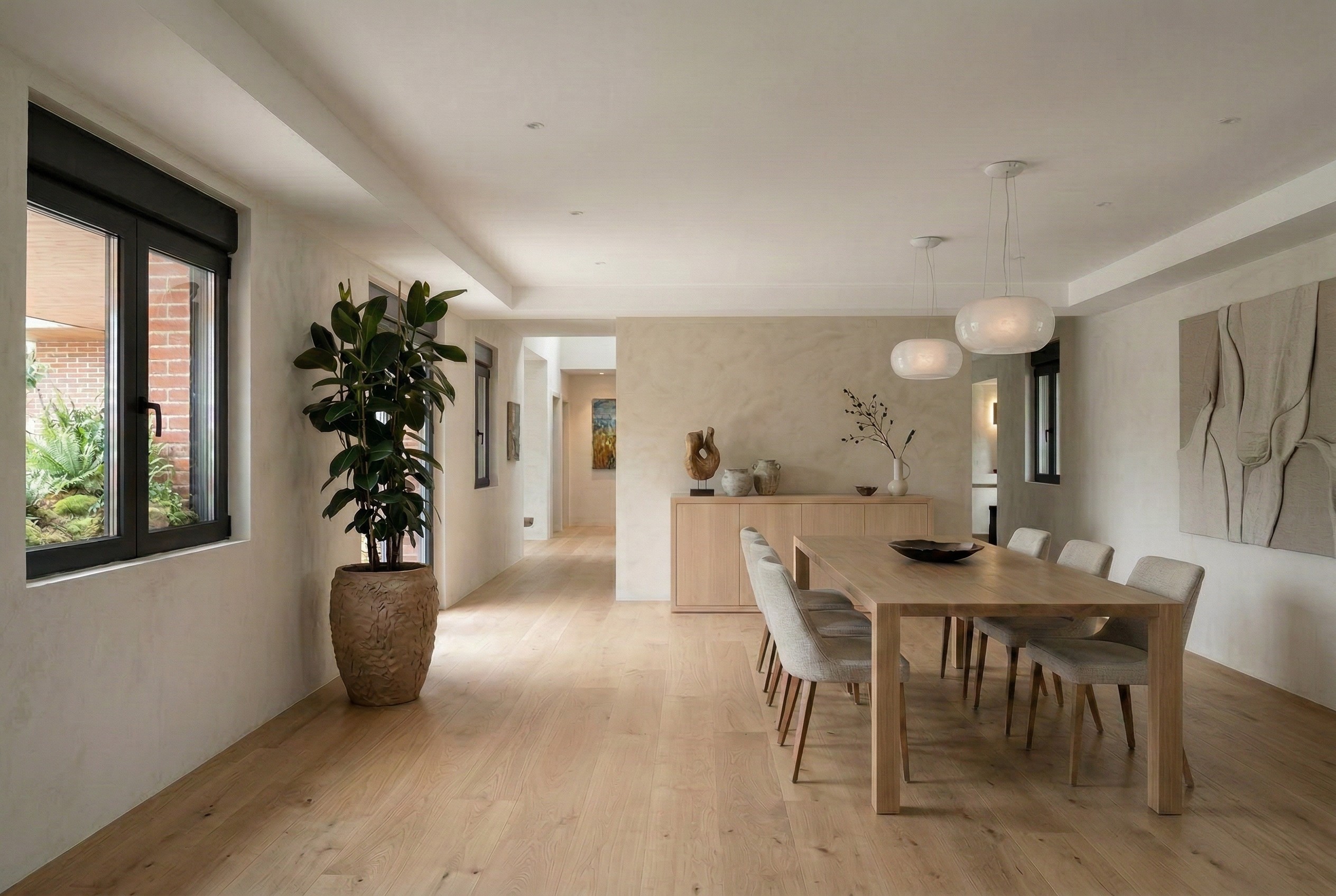
The project involves the complete transformation of a single-family house originally built in the 1980s. The new owners acquired the property with the intention of adapting it to accommodate a large family by creating more generous, contemporary spaces with a high degree of flexibility.
They also wished to integrate an independent workspace with separate access from the main living level, as well as create a true master suite on the primary floor of the house.
The existing layout, heavily compartmentalized, lacked clarity and coherence, particularly in the organization of circulation spaces.
Despite its generous surface area of approximately 800 m², the house failed to fully express its spatial potential. The rooms were relatively small, with no clear hierarchy or overall spatial vision.
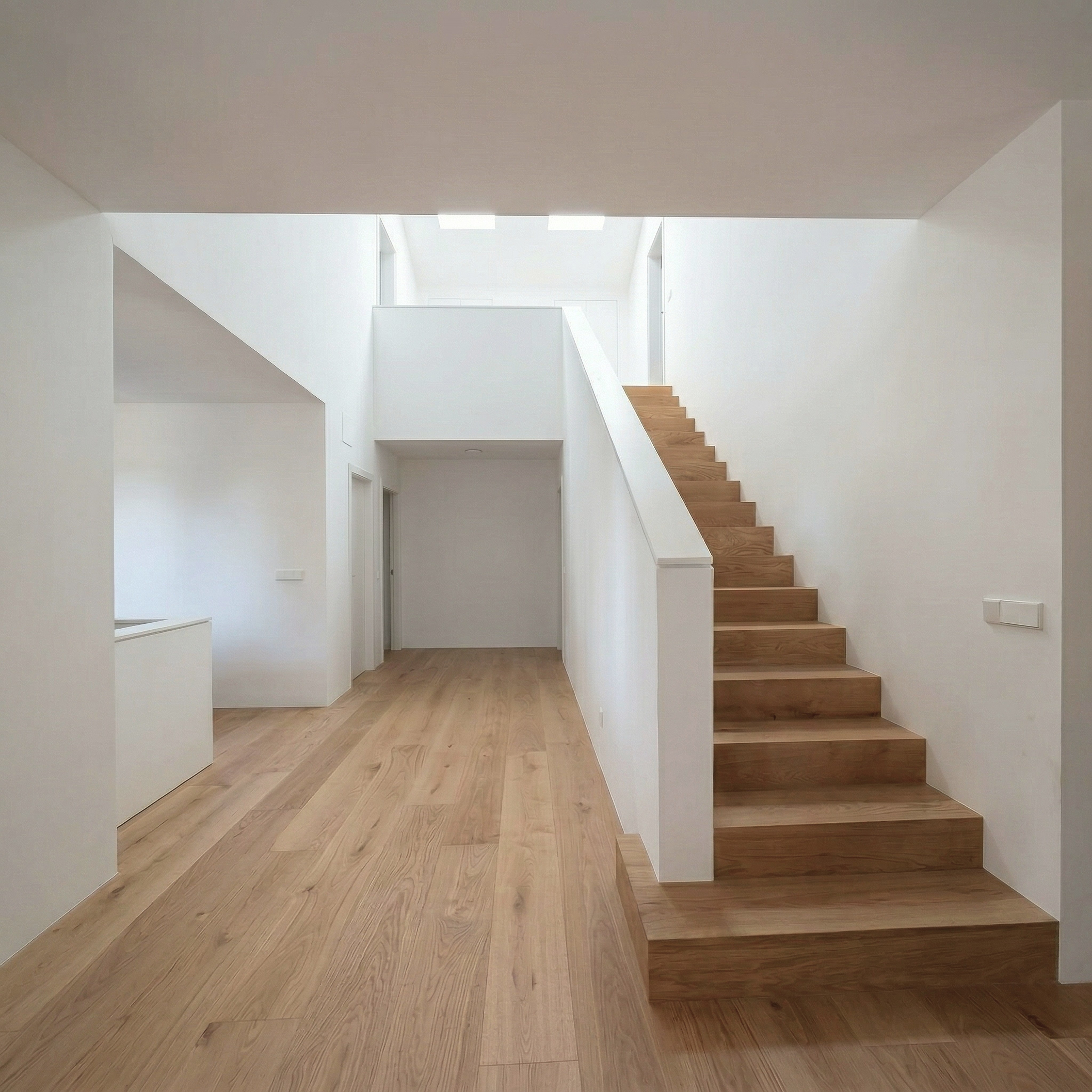
The project was developed around a simple yet structuring intention: to simplify circulation, restore a central role to the heart of the house, and redefine spatial proportions in harmony with the scale of the building.
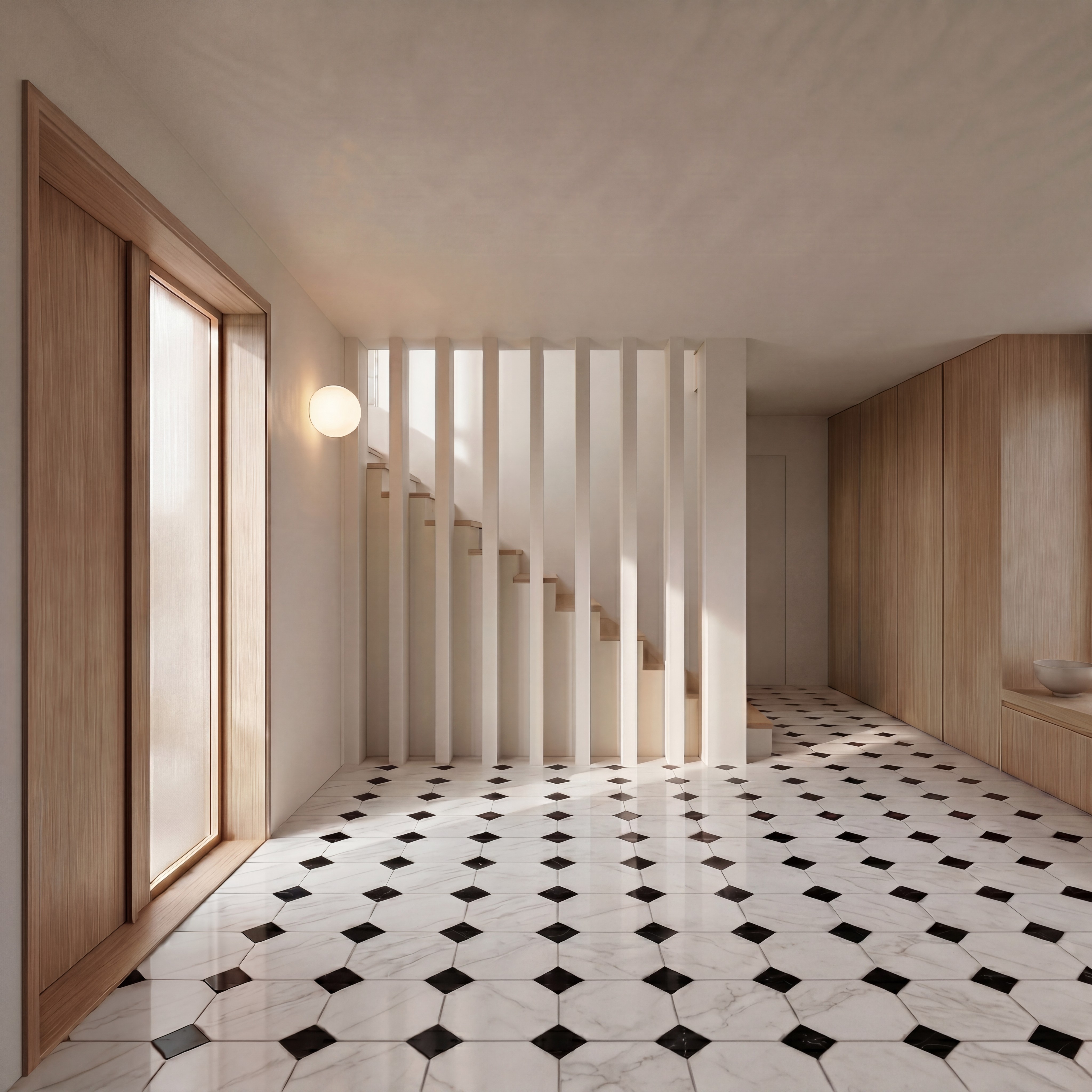
The project successfully reorganized the house in depth by simplifying circulation and making the spaces more legible and coherent. The different levels are now clearly connected, and natural light is fully enhanced throughout the house.
This transformation reveals the full potential of the property and creates a clearer, more coherent organization aligned with contemporary ways of living.